The portals will hand you one number for Historic Old Northeast and let you draw your own conclusions. As of January 2026, Redfin put the average sale at $825K, down 5.7% year over year, with the neighborhood scoring 49 out of 100 on its competitive index. Late 2025 broker data circulated a median closer to $857K with days on market climbing from 59 to 72. Vintage-home listings, tracked separately, sat at a $1.29M median list with a 95-day average on market.
Read those figures side by side and the neighborhood looks like it's cooling. Walk the blocks between 22nd Avenue and Coffee Pot Bayou and you'll see the opposite in real time. Both readings are correct. They describe two different markets that happen to share a name.
The median is describing a neighborhood that no longer exists as one market
The single most useful data point in current St. Petersburg inventory is not a price. It is an offer count. Homes listed in a designated flood zone are receiving an average of one offer per listing. Homes listed as "no flood zone" are receiving eleven. Same city, same buyer pool, same month. That is not a price story. It is a sorting story, and Historic Old Northeast sits directly on the sorting line.
Roughly 48% of properties in the neighborhood carry a severe 30-year flood risk designation, per First Street data surfaced through Redfin. The other 52% do not. The western portion of Old Northeast sits on slightly higher ground and falls largely into Zone X, which is why current listings there routinely lead with phrases like "Flood Zone X," "non-evacuation zone," and "never experienced flooding" before mentioning square footage. Sellers a few blocks east, closer to Coffee Pot Bayou and North Shore Park, are writing longer listings and pricing more cautiously.
| Western Old Northeast (largely Zone X) | Eastern & bayou-adjacent Old Northeast | |
|---|---|---|
| Typical flood zone | X | AE, with pockets of VE near the water |
| NFIP flood insurance required by lender | No | Yes |
| Listing language leads with | "Zone X," "never flooded," "block construction" | Water views, walkability, historic character |
| Days on market pattern (late 2025 – Q1 2026) | Weeks | Often 90+ for vintage stock |
| Buyer pool | Full field | Cash and post-Helene-comfortable buyers |
The two columns are the thesis. Everything below is why the split exists and what it does to a real transaction.
What Risk Rating 2.0 actually prices
FEMA's Risk Rating 2.0 changed the underwriting question from "which zone are you in" to "how far are you from water, how high is your first floor, and what does it cost to rebuild your house." Distance to water and first-floor elevation now drive premiums parcel by parcel, and increases on existing NFIP policies phase in under an 18% annual federal cap until the policy reaches its full-risk rate.
That mechanic matters for a specific reason. A buyer taking over a 1925 bungalow with a legacy NFIP policy is not inheriting today's premium. They are inheriting a premium mid-climb, with several more 18% steps ahead of it. The seller's disclosed insurance figure and the buyer's third-year figure can be materially different numbers. Two homes on the same brick-lined street, one with an original crawl-space elevation that clears base flood and one without, will diverge on carrying cost long after closing.
The City of St. Petersburg carries a CRS Class 5 rating, which delivers a 25% discount on NFIP premiums inside Special Flood Hazard Areas. That is real money, and it is one of the reasons Old Northeast still transacts at the volumes it does. It is also worth understanding as a floor, not a ceiling. The discount reduces the bill; it does not remove the requirement, and it does not travel with the buyer if underwriting logic changes.
The Citizens deadline the buyer pool is already pricing in
Florida's insurer of last resort, Citizens Property Insurance, now requires flood insurance for any residential policyholder with wind coverage and a dwelling limit of $400,000 or more. Policyholders below that threshold have until January 1, 2027 to comply. Every home in a Special Flood Hazard Area on a Citizens policy already needs flood coverage regardless of limit.
For Historic Old Northeast, where a large share of updated bungalows and estate homes clear the $400K dwelling threshold comfortably, this is not a future rule. It is a present one that is already sorting buyers into two groups. The first group ran the flood math before writing the offer. The second group is discovering it during underwriting and asking for a price concession or walking. That is a meaningful reason the "one offer" listings are one-offer listings.
The friction that catches buyers in this neighborhood is almost never the sale price. It is the third page of the insurance quote, arriving four days before closing, with a number that reshapes the debt-to-income calculation the lender already approved.
Florida Statute 689.302, in effect since 2024, requires sellers to disclose whether the property has ever had a flood insurance claim or received federal flood assistance. That disclosure is now standard in Old Northeast transactions, and it is doing quiet work. A clean disclosure on a Zone X home is a marketing asset. A disclosure noting a 2024 claim on a bayou-adjacent property is a negotiation input the seller has to price for at listing, not defend for at closing.
How to read a Historic Old Northeast listing block by block
The two-market split means the checklist for a serious buyer is not the checklist for a general Pinellas County buyer. In order:
- Pull the parcel on the Pinellas County flood map portal before the second showing. The FEMA Map Service Center gives you the designation; the county portal gives you the base flood elevation the underwriter will actually use.
- Ask the listing agent for the elevation certificate. On pre-1950 housing stock, its absence is itself information.
- Request the current NFIP declaration page and the renewal history. Under Risk Rating 2.0, the annual step-up pattern tells you more than the current premium.
- Confirm whether the seller carries a Citizens policy and what the dwelling limit is. If the answer is Citizens and $400K+, flood coverage is already in force and the true monthly figure is on the table.
- Read Section 689.302 disclosures against the property's post-2024 history. Helene and Milton reset the honest baseline for what "never flooded" means in this neighborhood.
- On homes marketed as "elevated" or "block construction," verify what was elevated. Mechanicals raised above base flood is a different asset than a slab raised six inches during a 2016 renovation.
None of the above is exotic. All of it is standard practice for the buyers who are writing the eleven-offer offers on the Zone X side of the neighborhood. The buyers writing the one-offer offers, more often than not, are working the older checklist.
What the two-market split does to the median
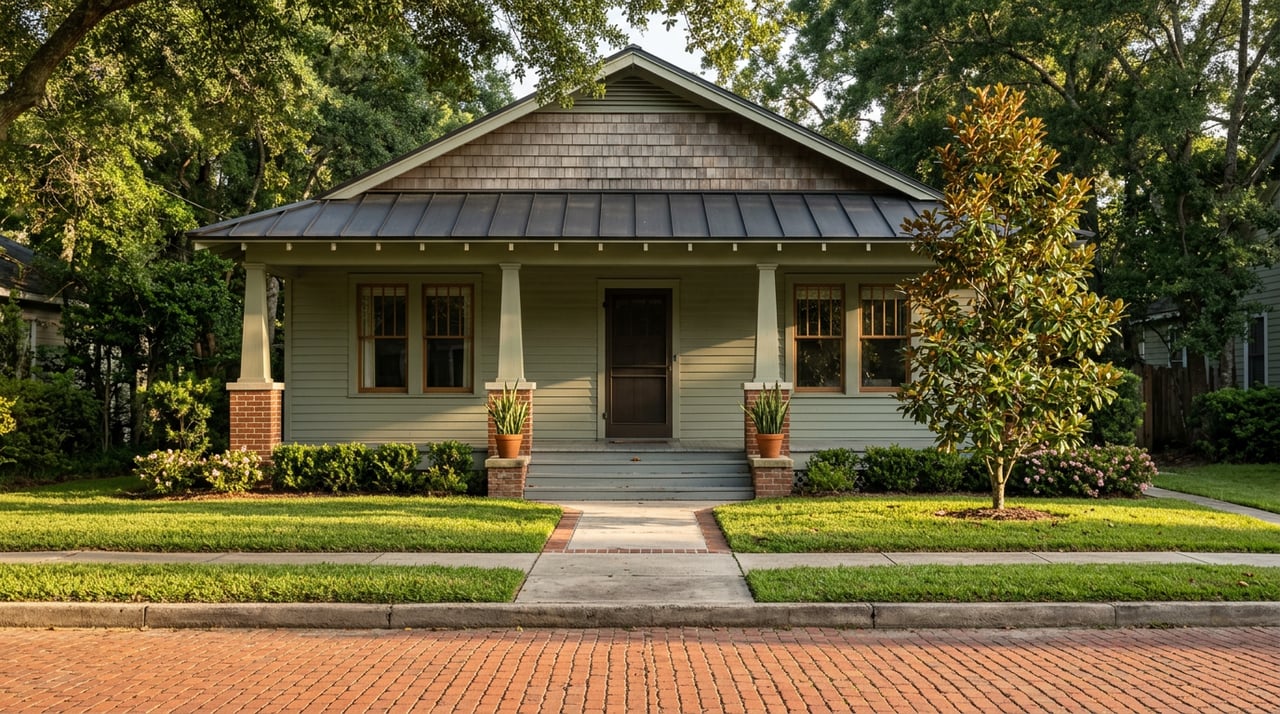
The $825K figure is arithmetic on a data set that mixes two products. A restored 1920s bungalow on a Zone X block west of 4th Street North, priced correctly, is trading closer to the vintage-segment $1.29M median and moving in weeks. A larger, older home a few blocks east, in AE with a post-2024 claim on record, may sit at a lower per-square-foot number for months while the buyer pool self-selects.
Transaction volume in Old Northeast rose year over year through late 2025, from twenty sales to thirty-five in a comparable period, even as the average number ticked down. That is the fingerprint of a market where the mix has shifted, not one where demand has softened. Buyers are still here. They are choosing more carefully, and they are choosing block by block.
For sellers, the implication is direct. Pricing to the neighborhood median is pricing to a fiction. Pricing to the flood-zone-specific comparable set, with the elevation certificate and the current NFIP declaration ready at first showing, is pricing to the actual buyer.
FAQ
Does a Zone X designation guarantee a home in Old Northeast is safe from future flooding? No. Zone X reflects FEMA's current modeling of flood probability, and First Street's forward-looking risk figures show flood exposure in Old Northeast increasing faster than the national average. Zone X primarily affects whether flood insurance is required by a lender and how Risk Rating 2.0 prices the parcel. It is not a hydrology guarantee.
Are Old Northeast homes with a documented 2024 claim unsellable? No. They are sellable at prices that reflect the disclosure, the current insurance quote, and any documented remediation. The market has absorbed post-Helene sales throughout 2025 and into 2026. What has changed is that the seller now has to bring the numbers to the table rather than leave them for underwriting to surface.
Why do broker medians for Old Northeast disagree with each other? Different data sets pull different property types and time windows. Redfin's neighborhood-level average blends condos, small bungalows, and estate homes in one figure. Vintage-segment medians filter for historic single-family stock. Late-2025 broker figures often use the six-month window that immediately followed Helene and Milton, which reshaped comparables. Read each number with its time window and its filter attached, or the number is not useful.
If you're weighing an Old Northeast purchase or preparing to list one, the meaningful conversation is not about the neighborhood average. It is about the specific block, the specific elevation, and the specific insurance math attached to the parcel. Kelli Welch and the TKW Difference team build every valuation from that level up. Let's curate your next move.