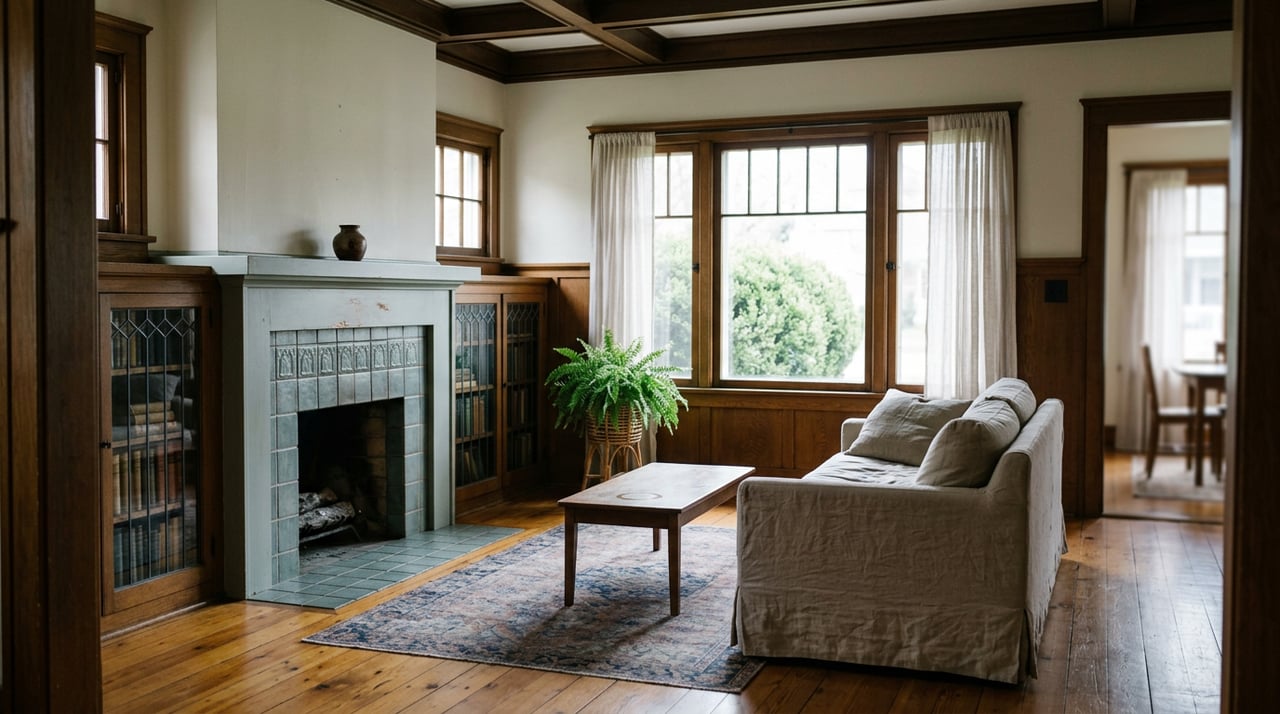
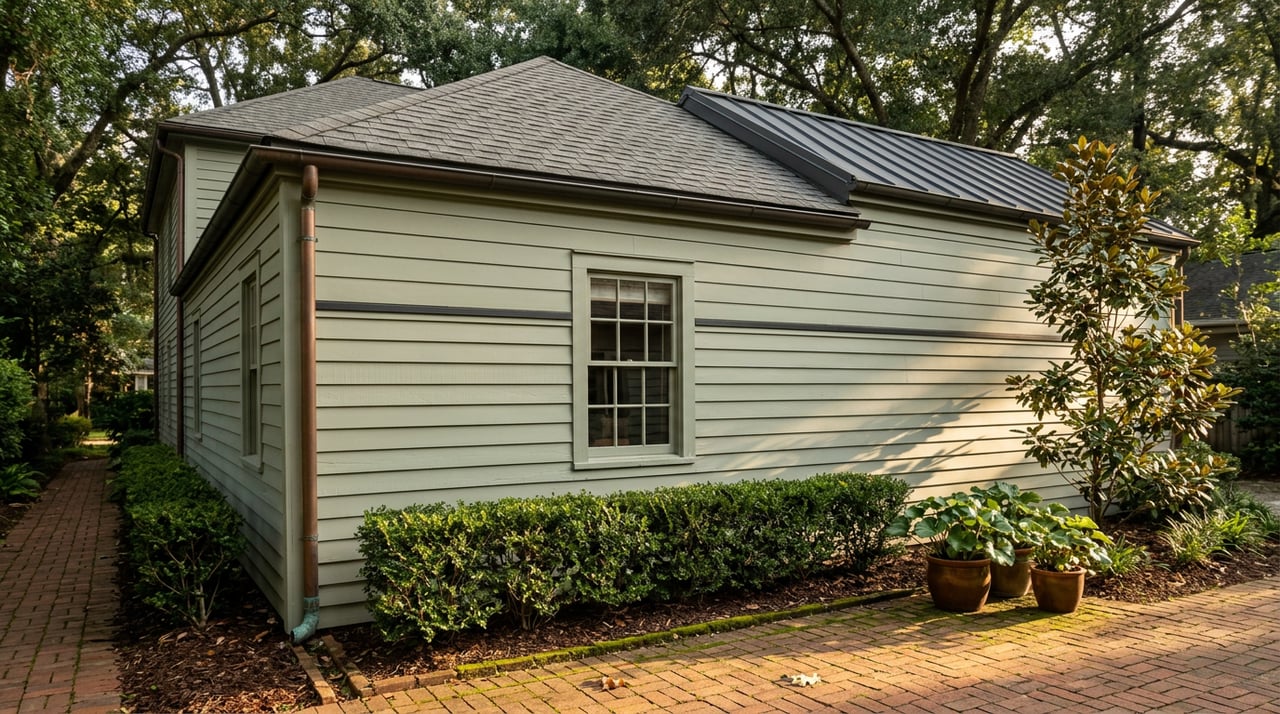
A buyer touring Crescent Lake this summer will hear some version of the same sentence from every listing agent: this is a historic neighborhood. Brick streets, 1920s bungalows, a Craftsman on nearly every block. It reads as a promise of both character and constraint, the assumption being that a neighborhood this old must come wrapped in the same design review and renovation red tape as St. Petersburg's other bungalow districts.
It mostly doesn't. Crescent Lake sits almost entirely outside the city's local historic district boundaries. A handful of its homes are individually eligible for landmark status, which is a real designation with real weight, but it is a narrow one, and it is not the same thing as living inside a regulated district. If you are comparing Crescent Lake to Historic Old Northeast, Historic Uptown, or Kenwood while deciding where to buy, the difference matters more than the brick paving does.
What the city's ten districts actually cover
St. Petersburg currently has ten local historic districts and five larger National Register historic districts. Those two categories sound similar and function very differently. A local historic district is the one that triggers a Certificate of Appropriateness review before an owner can touch a window, a roofline, or an exterior wall. A National Register listing, on the other hand, is largely honorary for residential property. It does not require design review or demolition review on its own. It mainly opens the door to a federal tax credit, and that credit applies to income-producing buildings, not the typical owner-occupied bungalow.
The regulated footprint is also smaller than most buyers picture. Local historic district protection covers well under one percent of the city's land area, even though nearly half of all buildings in St. Petersburg, roughly 46 percent, were built before 1960. Old age and legal protection are not the same variable, and the gap between them is wide.
That protected fraction is also lopsided. Four of the ten local districts sit inside the larger Kenwood National Register area, and together they account for 515 of the 707 total parcels covered by local district rules citywide. Roser Park, the city's first local district, and Granada Terrace, a defined pocket within Historic Old Northeast, make up most of the rest. Crescent Lake is not on that list. Neither is the broader area informally branded Historic Uptown, which is really the Round Lake National Register district wearing a marketing name. Its boundaries run roughly from 5th Avenue North to 13th Avenue North, between 4th Street North and 9th Street North, and like Crescent Lake, most of it has never been locally designated.
What Crescent Lake actually has
Crescent Lake's real regulatory status is narrower still. Some of its homes are individually eligible for the St. Petersburg Register of Historic Places, a status distinct from sitting inside a designated district. Individual eligibility does not trigger a Certificate of Appropriateness review, and it does not restrict what an owner can do to the exterior. The only teeth it has is a 30-day hold on a demolition permit, giving the city a short window to consider landmark designation before a structure comes down. Once that window closes, or if the address was never on the Potentially Eligible List in the first place, there is no design layer standing between an owner and their renovation plans.
A buyer choosing between two bungalows built the same year, one in Crescent Lake and one in Granada Terrace, is choosing between two very different regulatory futures, even if the houses look nearly identical from the street.
This cuts both directions. If you want the freedom to add a modern rear addition, swap out original wood windows for something more storm-resistant, or reconfigure a front porch without a hearing before the Community Planning and Preservation Commission, Crescent Lake gives you more room to do that than Old Northeast's Granada Terrace pocket or Kenwood's four local districts. If you are buying specifically because you want the neighborhood's architectural character legally locked in against a future owner's remodel, or against a teardown next door, Crescent Lake offers less of that assurance than its brick streets suggest.
A recent case that shows the limits of "historic" on paper
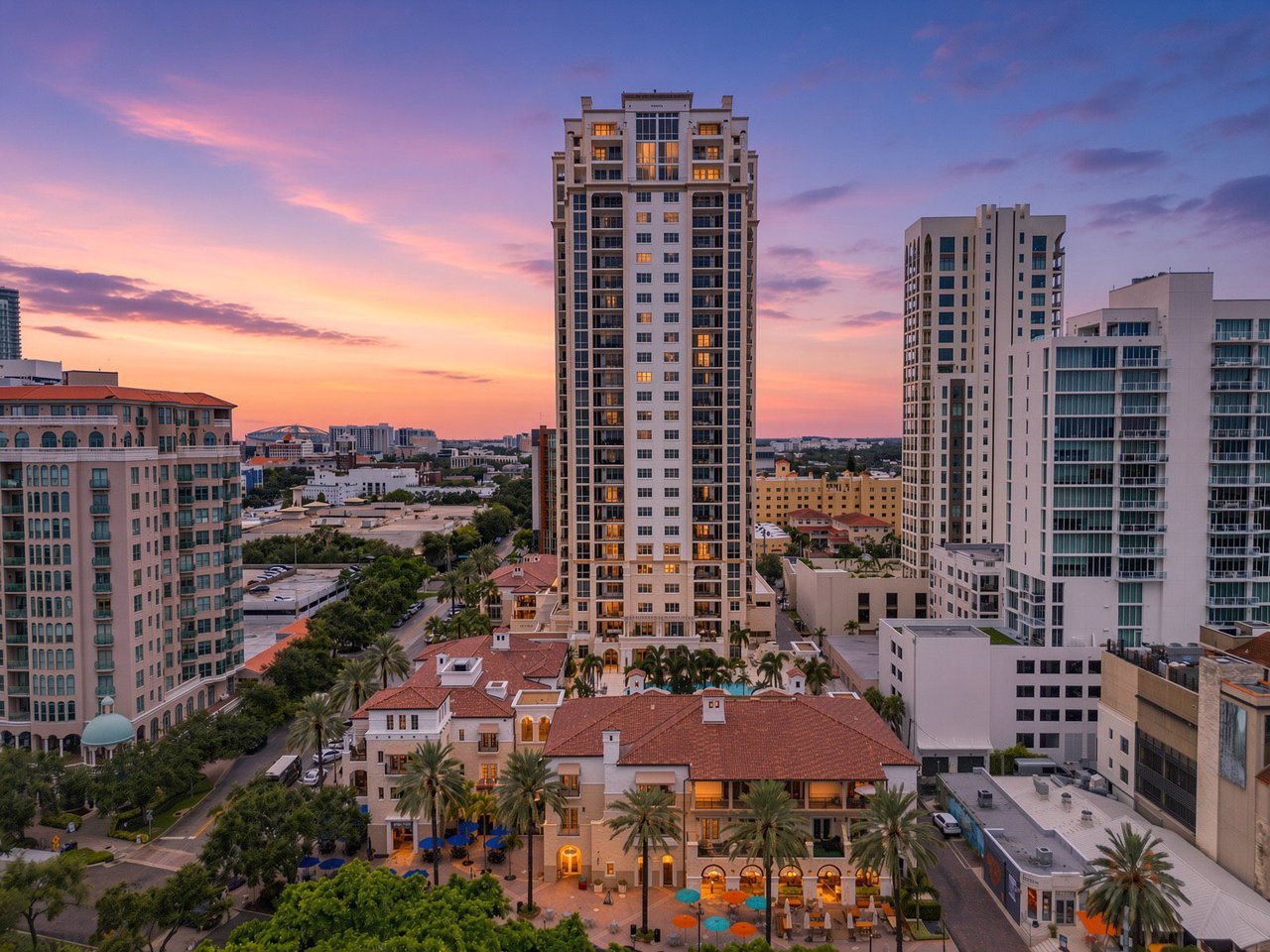
In 2025, a developer filed plans for a 21-story residential tower at 5th Avenue North and 4th Street North, inside the Downtown St. Petersburg National Register Historic District and immediately adjacent to the Round Lake and Northshore National Register districts. The project called for demolishing seven structures, five of which were considered contributing to the historic district. City staff noted plainly that contributing resources in a National Register district are not protected from demolition unless they also carry a separate local landmark designation. Preserve the 'Burg, the city's preservation advocacy group, raised objections over the loss of older rental housing and the project's scale relative to the historic streets around it, and the developer's attorneys asked St. Petersburg's Development Review Commission for a 60-day continuance after commissioners pushed back at the hearing.
The outcome matters less here than the mechanism it exposed. Being inside a National Register district, even a well-known one, did not by itself stop demolition. Only local designation does that. It is the same distinction that separates Crescent Lake's scattered individually eligible homes from a fully regulated district like Roser Park or the Kenwood local districts, and it is worth understanding before you assume a neighborhood's historic reputation comes with the protections people picture.
What this means before you write an offer
If a specific Crescent Lake address matters to you, the individual parcel is what to check, not the neighborhood's overall reputation. The city's Urban Planning and Historic Preservation Division maintains a historic preservation map module and can confirm, address by address, whether a property is individually eligible, listed, or carries no designation at all. Staff can be reached directly at [email protected] for that confirmation, and it is a five-minute question that resolves a real unknown before you get deep into a contract.
A few things worth confirming before you commit:
- Whether the specific address appears on the city's Potentially Eligible List, which only affects demolition timing, not renovation plans
- Whether any exterior work you are already planning would require a Certificate of Appropriateness, which only applies inside a local historic district or on an individually designated landmark
- Whether the seller's disclosures mention any prior landmark application or Community Planning and Preservation Commission review on the property
Pricing data adds one more reason to look parcel by parcel rather than trusting a single headline number. As of July 2026, one major listing platform put Crescent Lake's median home price at $900,000 with four active listings ranging from $910,000 to $2.4 million and an average of 39 days on market. In that same window, another national tracker showed the average sale price closer to $1.43 million, up sharply from the prior year. Both can be technically accurate. Crescent Lake sees only a handful of closings in a typical month, and a market that thin will produce wildly different medians depending on which two or three sales happen to close in the window a given site is measuring. The lesson carries over from the historic designation question: neighborhood-level figures, whether about price or about protection, tell you less than the specific address does.
FAQ
Does buying a 1920s bungalow in Crescent Lake mean I need city approval for renovations? Not by default. Certificate of Appropriateness review only applies inside a designated local historic district or to a property with individual local landmark status. Most Crescent Lake homes carry neither.
What does it mean if a home is on the Potentially Eligible List? It means a demolition permit on that address would be held for 30 days so the city can consider landmark designation. It does not restrict renovation, window replacement, or additions in the meantime.
How do I find out if a specific address carries any designation? Contact the city's Urban Planning and Historic Preservation Division at [email protected], or review the city's historic preservation map module, before you finalize an offer.
Buying in a neighborhood this specific deserves someone who has already sorted out which of its charms are enforceable and which are simply true. Kelli Welch works these St. Petersburg bungalow neighborhoods block by block, and we would welcome the chance to walk through what a particular Crescent Lake address does and does not carry with it. Let's curate your next move.